
Parchís vs Ludo vs Parcheesi: What's the Difference?
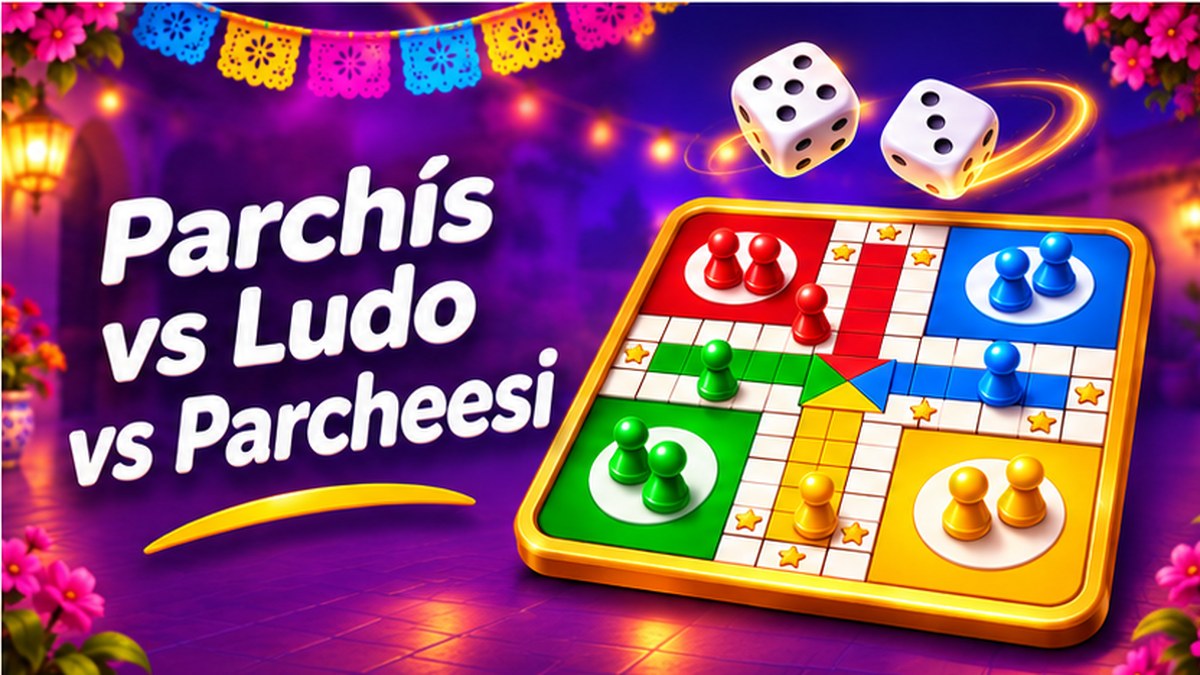
Ask people around the world about "the game with four colours and a die" and you'll hear many names: Ludo in Britain, India and Africa, Parcheesi in the United States, Parchís in Spain, Parqués in Colombia, Mensch ärgere dich nicht in Germany, Petits Chevaux in France. They look almost identical on the table, yet the rules – and the feel of the game – can be surprisingly different.
Here is a friendly guide to the family, with a focus on Parchís, the version we built Parchís Fiesta around.
One ancestor: Pachisi
All of these games descend from Pachisi, a traditional race game from India played on a cross-shaped board. Players race their pieces around the arms of the cross and back to the center, originally using cowrie shells instead of dice. Pachisi is often called a "cross and circle" game, a family name that covers all its descendants.
When the game travelled to Europe and the Americas in the 19th century, each region simplified or adapted it. The name Ludo (Latin for "I play") was registered in Britain in 1896, and the American Parcheesi became a trademarked brand. In Spain the game kept a generic name, Parchís, and grew into a household classic that is also loved in northern Morocco and Latin America.
The big differences at a glance
| Feature | Ludo | Parcheesi (US) | Parchís (Spain) |
|---|---|---|---|
| Dice | 1 die | 2 dice | 1 die (some variants 2) |
| Number to leave home | 6 | 5 | 5 |
| Safe squares | Few or none (varies) | Yes | Yes, 12 |
| Blockades | Usually no | Yes | Yes |
| Capture reward | Usually none | Bonus squares | +20 squares |
| Reaching the center | Nothing extra | Bonus squares | +10 squares |
| Feel | Simple, family, luck-heavy | Strategic | Strategic, social |
House rules vary a lot, so treat this table as the common versions rather than strict law.
What makes Parchís special
Safe squares change everything
Parchís has 12 safe squares where pawns cannot be captured. Instead of running blindly, you hop from one star to the next, waiting for the right moment to attack.
Walls create real decisions
Two pawns of the same colour on one square form a blockade that nobody can pass. You can trap rivals behind your wall – until you roll a 6, when you're forced to open it.
Bonuses reward aggression
Capturing a rival pawn gives 20 squares and bringing a pawn to the center gives 10. These bonuses make comebacks possible and keep everyone involved until the end.
Sixes have a twist
In Parchís a 6 lets you roll again, counts as 7 once all your pawns are out, and three 6s in a row send your last moved pawn back home. Greedy streaks can backfire!
Which one should you play?
- For young children: classic Ludo is the simplest – fewer rules, easy to learn.
- For a thinking game with family and friends: Parchís or Parcheesi, thanks to walls, safe squares and bonuses.
- For quick sessions: any of them with fewer pawns. In Parchís Fiesta, Quick mode uses two pawns per player.
Playing Parchís today
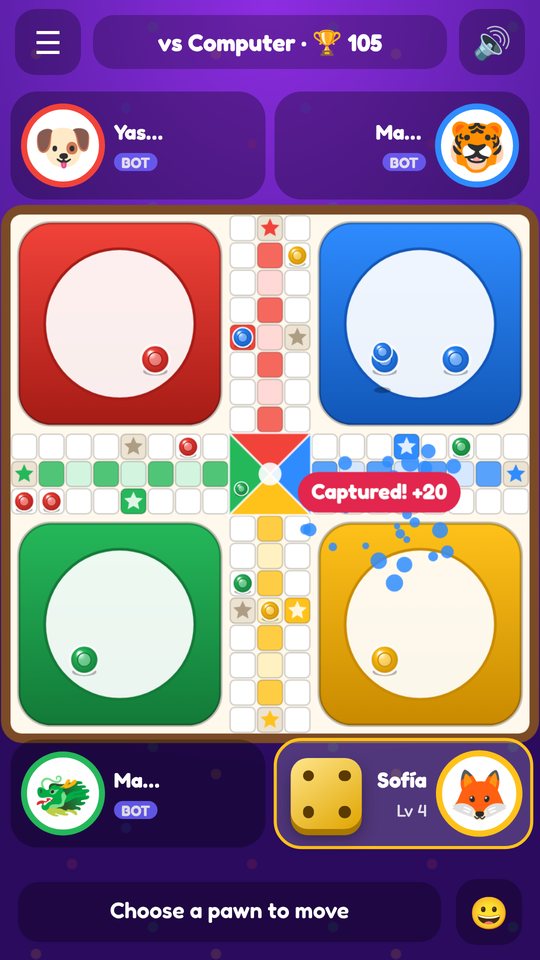
Board games moved online long ago, and Parchís is no exception. If you want the real Spanish rules with a modern touch, Parchís Fiesta offers:
- Online quick matches and private tables with friends (no account needed)
- Cross-play between the Android app and the browser
- vs Computer with three difficulty levels, offline
- Pass & Play on one phone
- Dice you can verify after every match
Frequently asked questions
Is Parcheesi the same as Parchís?
They are close cousins. Both use 5 to leave home and allow blockades, but the US Parcheesi is traditionally played with two dice, while Spanish Parchís usually uses one.
Why is it called "cross and circle"?
Because the boards of the family are built around a cross-shaped track with a central goal area, often drawn inside a circle in older versions.
Where can I learn the full rules?
Our beginner's guide to Parchís explains every rule with screenshots, and our 12 strategy tips will help you win more games.
Whatever you call it at home, the fun is the same: roll, race and send a rival back home. Play Parchís Fiesta free or get it on Google Play.