
How to Relax with Puzzle Games: A Simple 10-Minute Routine
After a long day, a lot of people reach for their phone to "switch off." Too often that means endless scrolling, which rarely feels restful. A calm puzzle game can be a better option: it gives your mind one simple thing to focus on, then lets you put the phone down feeling a little better.
Here is how to make puzzle games genuinely relaxing, including a routine we like ourselves.
Why puzzles can feel calming
- One clear task. A puzzle has a simple goal. Focusing on it pushes other thoughts aside for a while.
- You control the pace. Games with no timer never rush you.
- Small wins. Every cleared line or finished level is a tiny, satisfying moment.
- Natural stopping points. Levels end, which makes it easier to stop.
Choose the right kind of game
For relaxing, pick games that are:
- untimed – block puzzles, sudoku, solitaire, jigsaws;
- visually soft – pleasant colors, smooth animations;
- forgiving – undo buttons, easy retries;
- single-player – no competition or chat.
Competitive or fast games can be fun, but they tend to raise your heart rate rather than lower it.
Settings that make a difference
- Turn on soft music, or turn it off. Gentle background music helps some people relax; others prefer silence. Most games let you choose.
- Lower the brightness or use your phone’s night light, especially in the evening.
- Silence notifications for a few minutes so you are not interrupted.
- Turn off vibration if it feels distracting.
A simple 10-minute routine
Minute 0–1: Settle in
Sit somewhere comfortable. Put the phone on Do Not Disturb. Take two slow breaths before you start.
Minutes 1–8: Play without chasing scores
Play a few levels, but do not worry about stars or records. Focus on each move: look at the pieces, find a good spot, place them. If you lose, simply start again. The goal is the process, not the result.
Minutes 8–9: Finish on a win
End with an easy level or a replay of one you like. Stopping after a success feels much better than stopping after a loss.
Minute 9–10: Put it away
Close the game, put the phone down and notice how you feel. If you are using this routine before bed, this is the moment to switch the screen off for the night.
Habits to avoid
- "Just one more" loops. Decide how many levels you will play before you start.
- Playing to beat frustration. If you are losing repeatedly and feel annoyed, stop. The game will still be there tomorrow.
- Late-night marathons. Long screen sessions right before sleep can make it harder to fall asleep. Keep evening sessions short.
Relaxing modes in Gem Garden
When we designed Gem Garden, relaxation was a priority. There is no timer in any mode, the music is slow and ambient, and you can undo mistakes. Classic mode is especially calming: there is no goal except to keep placing blocks at your own pace.
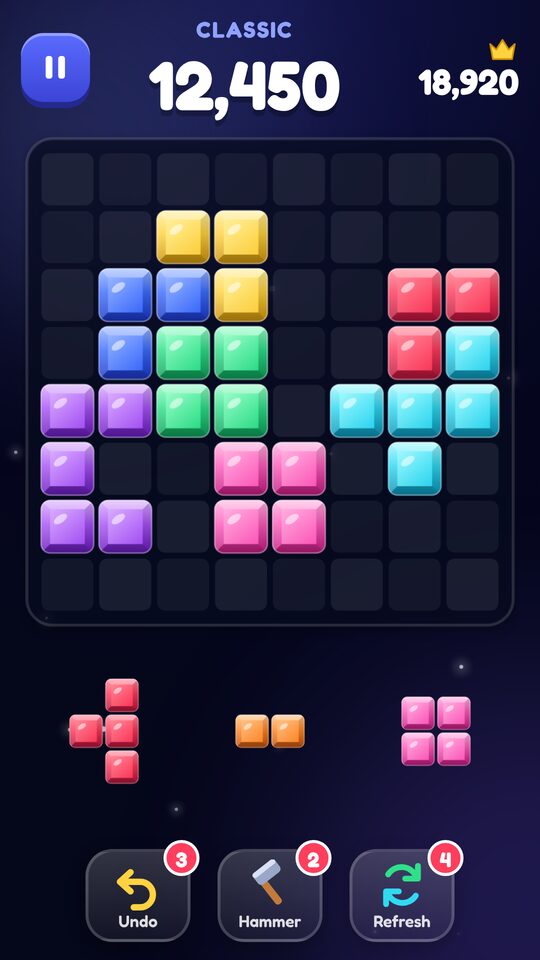
You can play Gem Garden online in your browser, and if you want to learn more about healthy play, read our article on healthy gaming habits.
Frequently asked questions
Are puzzle games good for stress? Many people find that a calm, untimed puzzle helps them switch off for a few minutes. Everyone is different, so notice how you feel after playing and adjust.
What is the most relaxing type of puzzle game? Games without timers or opponents: block puzzles, jigsaws, sudoku, solitaire and sorting games. Soft visuals and gentle music help too.
Is it okay to play before bed? A short session is fine for most people. Keep it brief, lower the brightness and stop a little before you want to sleep.
How long should a relaxing session be? About ten minutes is a good target: long enough to settle into the game, short enough to stop easily.