
Why Are Sorting Games So Satisfying? A Look at the Design
Water sort, ball sort, color sort, goods sort — sorting games have become one of the biggest families of mobile puzzles. People who do not usually play games often enjoy them, and many players describe them with the same word: satisfying.
As a studio that makes a sorting game, we think a lot about where that feeling comes from. Here is a look at the design behind it — without exaggerated claims, just the ideas that make these games work.
Turning chaos into order
Every sorting game starts with a mess: mixed colors, scattered balls, a store with products everywhere. Every move makes the screen a little tidier. By the end, everything is in its place.
That journey from disorder to order is satisfying in the same way that tidying a desk or organizing a cupboard can be. The difference is that a game makes it quick, clean and effortless — no real dust involved.
Clear goals and instant feedback
Sorting games are easy to read. You can usually see the goal at a glance: get three of the same together, fill a tube with one color, empty the shelves. And every good move gets an immediate response:
- items pop or disappear,
- a sound plays,
- a counter goes up,
- the board looks cleaner.
Clear goals and immediate feedback are two of the most important ingredients of any enjoyable game. Sorting games put them front and center.
Small decisions, steady progress
Each move in a sorting game is a small, low-stakes decision. You are rarely punished harshly for one mistake, and there is usually a way to recover. That makes the game feel calm, even when it is challenging.
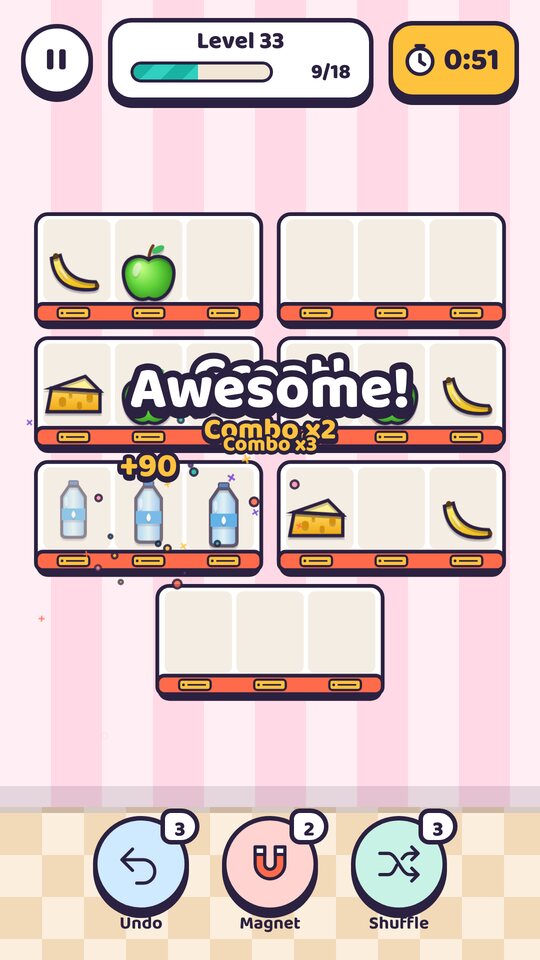
At the same time, progress is visible all the time. In Shelf Mart, a bar at the top fills as you sort, so you always know how close you are to the end.
A puzzle that grows with you
Good sorting games start very simple and slowly add layers. In goods sort games, the main twist is hidden items behind the front row. Suddenly the question is not only "where does this go?" but "which shelf should I empty first?" That is where planning comes in, and it keeps the game interesting long after the basics are mastered.
Why they are easy to pick up
- One-finger controls — drag or tap, nothing else.
- No reading required — the pictures explain themselves.
- Short levels — a minute or two each.
- Friendly visuals — bright colors and cute objects.
These qualities make sorting games accessible to almost everyone, from kids to grandparents.
The not-so-satisfying parts
To be fair, players also have frustrations with the genre, and we read those reviews carefully. The most common complaints are:
- Ads in the middle of a level that break the flow.
- Timers that feel too short.
- Difficulty spikes that seem designed to push paid boosters.
When we built Shelf Mart, we tried to address each one: ads only appear between levels, time limits are based on playtests, every level is tested to be beatable without boosters, and Zen Mode removes the timer entirely.
Enjoying sorting games in a healthy way
Sorting games are a pleasant hobby. A few simple habits keep them that way:
- decide how many levels you will play before you start,
- take a short break every so often to rest your eyes,
- use a no-timer mode when you want to relax,
- avoid long sessions right before sleep.
Our article on healthy gaming habits has more ideas.
Different flavors of sorting
| Type | What you sort | Main challenge |
|---|---|---|
| Goods sort | Products on shelves | Hidden items behind the front row |
| Water / color sort | Colored liquid in tubes | Limited space and pouring order |
| Ball sort | Balls in tubes | Stack order |
| Block puzzle | Shapes on a grid | Fitting pieces and clearing lines |
If you enjoy sorting, you might also like our block puzzle game — read how to play block puzzle.
Try a calm sorting game
Want to feel that satisfying click for yourself? Play Shelf Mart online — start with a few levels, or open Zen Mode and sort at your own pace.